

When the No. 6 Carleton Ravens meet the No. 3 Laval Rouge et Or in the U SPORTS Final 8 quarterfinal, the most decorated program in Canadian university basketball will come together with a national champion two years removed that’s determined to prove its breakthrough was no anomaly.
Legacy versus ascent; one of the most intriguing story arches in sports.
Tipoff is scheduled for 2PM local time on Friday, March 6.
Carleton’s Profile
The Ravens own a 134-48 playoff record, a sustained March résumé that separates them from nearly every program in the country. They have captured 17 national championships and made 26 Final 8 appearances. But their most staggering stretch came between 2002-03 and 2018-19, when Carleton won 13 national titles — a run of control rarely seen at any level of the sport.
For nearly two decades, nationals were not an aspiration in Ottawa. They were an expectation.
Carleton enter nationals at 25-9 overall and 17-5 in OUA play, and outscored conference opponents by 13.1 points per game, allowing just 63.6 overall. In the playoffs however, that margin has shrunk to just a 6.1.
Personnel and Path so far
OUA Defensive Player of the Year Nelson Cilien anchors that hard nosed identity. Behind him, the Ravens rebound by committee, averaging 44.1 boards per game. Frontcourt pieces like Coulibaly (8.2 rebounds per game) and Milon (7.1) limit second chances and grind games down to the margins.
Offensively, the production is balanced rather than explosive. Okado leads at 14.5 points per game, followed by Dorey-Havens (13.6) and Milon (11.3), giving Carleton multiple steady options without leaning on a single high-volume scorer. The Ravens shoot 31 per cent from three overall — serviceable, but not overwhelming — reinforcing a style that prioritizes shot selection over pace.
In the quarterfinal in Ottawa, the Ravens pulled away from Lakehead in a 73-58 win. Carleton never allowed the game to drift into chaos, advancing comfortably on home floor.
The semifinal brought a sterner test, but the Ravens held firm. Carleton defeated the Toronto Varsity Blues 80-65, leaning on balanced scoring and a decisive second-half push.
The championship game in Toronto was different. Against Toronto Metropolitan, the Ravens were unable to generate the separation they had earlier in the bracket against Aaron Rhooms’ squad, falling 66-5 to the Bold. It was a low-scoring contest dictated by defense — only this time, Carleton was on the wrong side of it.
Defense over dynamism. At nationals, that mantra rarely goes out of style.
Versus the Field
Carleton holds a 7-1 edge over the Calgary Dinos and a commanding 21-3 mark against the powerhouse Victoria Vikes, two programs that have consistently contended deep into March.
Against the remaining teams at Final 8, Carleton is 86-24 versus Toronto Metropolitan, 13-5 against the Acadia Axemen, 2-3 against UBC, and 45-18 with the Bishop’s Gaiters.
Laval’s Profile
Laval’s national résumé is shorter — but no longer empty.
The Rouge et Or hold a 27-29 all-time playoff record, have reached the Final 8 seven times, and appears to be a program potentially on the rise.
The defining moment arrived in 2024, when Laval captured its first national championship — a breakthrough that altered the trajectory of the program and reshaped how it is viewed across the country.
Across 50 seasons, Laval’s program sits at 521-679 overall (.434) and 283-406 in conference play (.411).
While those numbers might not be flashy, this Laval squad has legitimate firepower.
The Rouge et Or are 22-8 overall, 13-3 in the RSEQ, and built around an offence that hums steadily at 78.1 points per game. The defensive profile is more forgiving than Carleton’s — 70.2 points allowed overall, 69.1 in conference — but Laval’s identity is less about containment and more about shot creation.
Personnel and Path so far
Everything begins with Christophe Tshibola, the most dynamic scorer in the matchup.
The senior guard poured in 33 points in an overtime RSEQ semifinal win over Concordia, carrying Laval through to the finals where he put up 27 on Bishops. Well above his reguar season average of 20.4 points per game. The Rouge et Or defeated the Gaitors 81-78, in a battle of the conference’s top two seeds.
If there is a headline matchup, its Tshibola’s isolation scoring against Carleton’s length.
The next layer is Chakib Sedoud, the RSEQ First Team and All-Rookie selection who gives Laval a second punch. Sedoud averages 17.8 points and 7.3 rebounds per game, shooting 43.3 per cent from three overall and an eye-catching 48.6 per cent in league play.
The Rouge et Or are not a pure volume three-point team — they shoot 29.7 per cent collectively — but they space the floor through specific roles. Larosilière lives beyond the arc, knocking down 75 triples to date and averaging 12.8 points per game. The shooting may not be overwhelming by percentage, but it is deflating for the opposition.
The Rouge et Or are more comfortable accepting defensive trade-offs in exchange for higher-end scoring bursts than the Ravens, but Carleton’s structure could prevent that offence from ever getting started.
Versus the Field
Historically, the Rouge et Or have struggled against Calgary and Acadia, posting an 0-4 all-time record versus the Dinos and 3-5 against the Axemen. Against Victoria and UBC, Laval sits at the break-even mark, with 4-4 and 2-2 records, respectively. The Rouge et Or are 6-14 all-time against TMU.
Laval holds a narrow .506 edge in its decades-long rivalry with Bishop’s, leading the series 81-79. The average scoring margin of -1.0 points underscores just how little has separated the programs over time.
Coaching Battle
Since taking over for legendary Dave Smart at Carleton, who compiled a record of 591-48 over 20 years, Taffe Charles has sustained a formidable run of his own. Carleton owns a 98-26 conference record under his watch, good for a .790 winning percentage.
Combined with the results from nationals, the Ravens are 149-39 (.793) with Charles and have added three more national championships in 2019-20, 2021-22 and 2022-23.
More recently though, Carleton missed the podium in 2023-24, and the 2024-25 campaign passed without a national banner. Entering 2026 as a No. 6 seed, the Ravens are not the automatic favourite, but a contender required to prove it again.
Meanwhile, the Nathan Grant era in Laval has not followed a straight line.
Since 2019, Laval is 38-54 in conference play (.413) and 64-83 overall in U SPORTS competition (.435). The early seasons were challenging, as the rebuilding Rouge et Or went just 4-20 in 2019-20 and 5-12 in 2021-22.
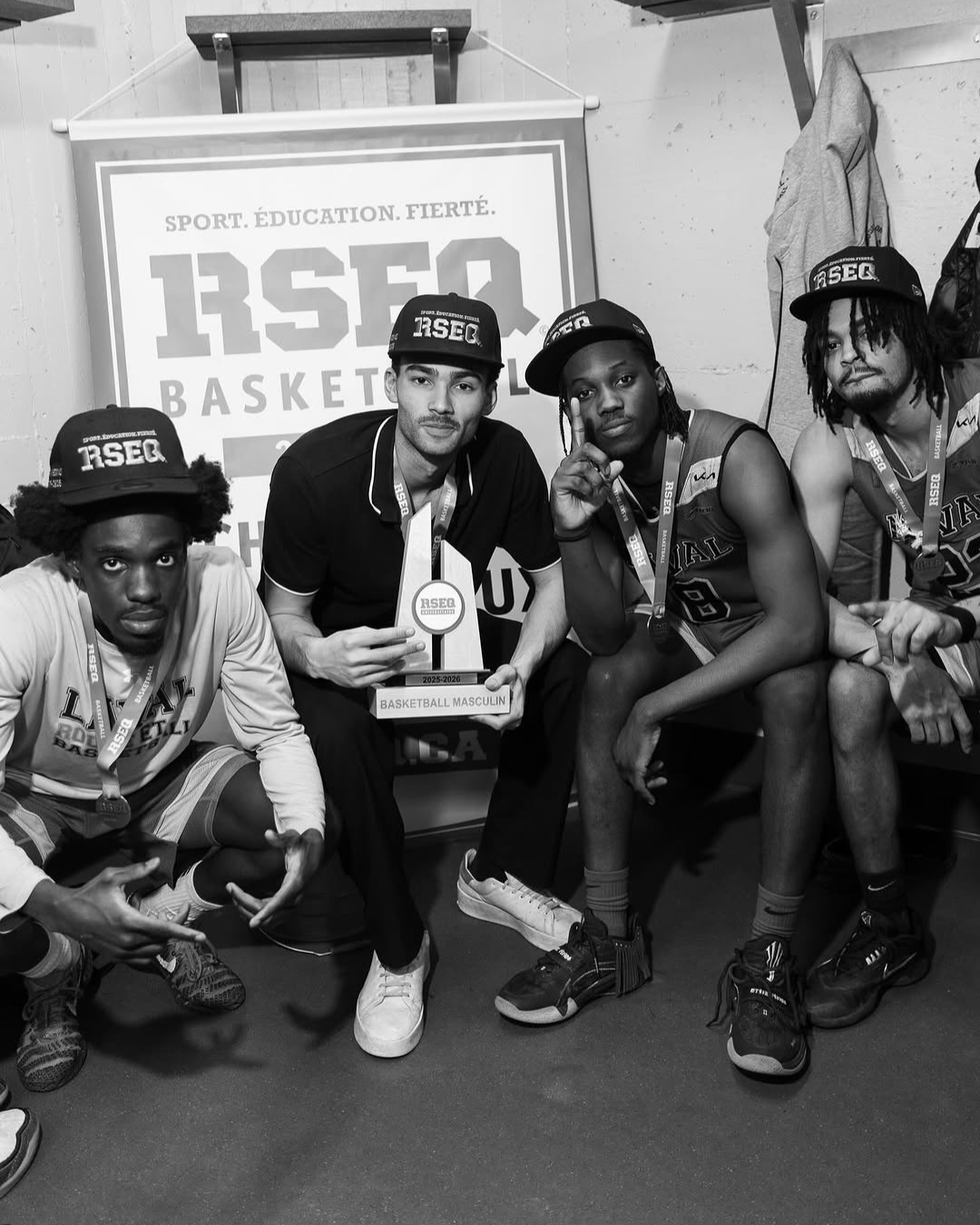
In 2023-24 however, Grant’s team broke through as U SPORTS national champions. In 2025-26, they returned as RSEQ champions with another Final 8 berth. A work in progress, but with a undeniable high ceiling.
Carleton represents decades of dominance and annual expectation — Laval represents proof the gap can close.
Head-to-head
History leans heavily to one side, as for decades, Laval was one of many programs swallowed by the Carleton machine.
Carleton leads the all-time series 34-3, a .919 winning percentage that underscores years of control. The Ravens have averaged 77.6 points in those meetings, and a commanding average margin of 16.5.
The numbers tell a story of sustained dominance, but recent memory makes things more complicated. Laval’s capturing of the 2024 national championship, infuses this matchup with an extra emotional weight, even if the long-term ledger still favours Ottawa.
The past belongs to the Ravens, but the present feels far less settled.